They say the third time is the charm. I believe that now. I failed twice before photographing this once-in-a-lifetime opportunity. I tried at my home’s front lawn and a nearby park. The first time I wanted to take it (October 16, 2024), I pointed aimlessly at the sky in hopes of capturing a glimpse of this comet. I attempted to use the stargazing app Sky Safari Pro. However, I still could not find the comet. I failed to realize that I was too early and that the comet would not be visible to the naked eye, so I ended up being frustrated at myself and sourly studying for my calculus test.
The second time (October 17, 2024), my dad and I went to a park and tried to set up my equipment there, but I was fooled again. I was pretty clueless, and I thought the comet had already set when it was well above the horizon. The sun had not set yet, but according to the made-believe facts I made myself (I said the stargazing app is inaccurate), I thought the comet would be visible while the sun was still there. So I returned home dejected, hauling my heavy camera bag and tripod back into my home.
However, the third time (October 19, 2024), I was determined to find it. After hours of watching YouTube tutorials on Friday, I was prepared for the comet and its whereabouts. Honestly, I still didn’t believe I would get it, yet I still wanted to try.
So, after drinking my chai, my dad and I set out on an adventure to photograph this beast. Back at the park, I set up my DSLR outside my car. I saw the first glowing object in the sky, and the delusions fed me. I thought that object was a comet. Little did I know, it was the planet Venus. I accidentally gaslit myself and my dad, considering that we could see the tail of the “comet” and that it was just a matter of the sun setting so I could photograph it at a lower ISO and longer shutter speed. Therefore, I sat in the trunk of my car, waiting for the sun to set. My dad started to speculate whether the comet would even be that bright. Now that the thought crossed my mind, I began to contemplate, too.
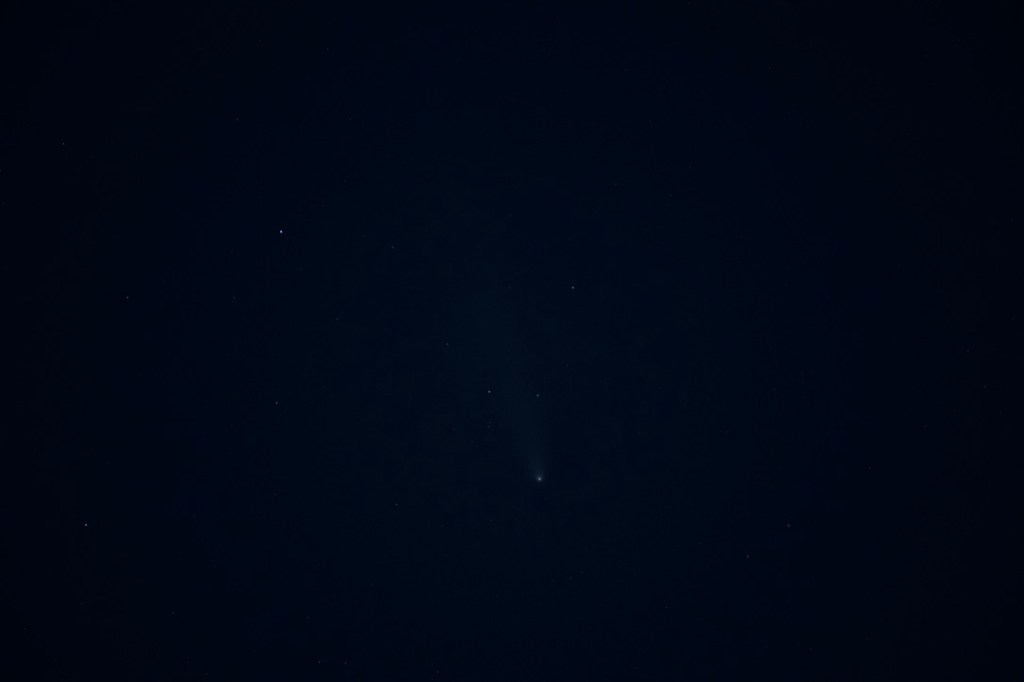
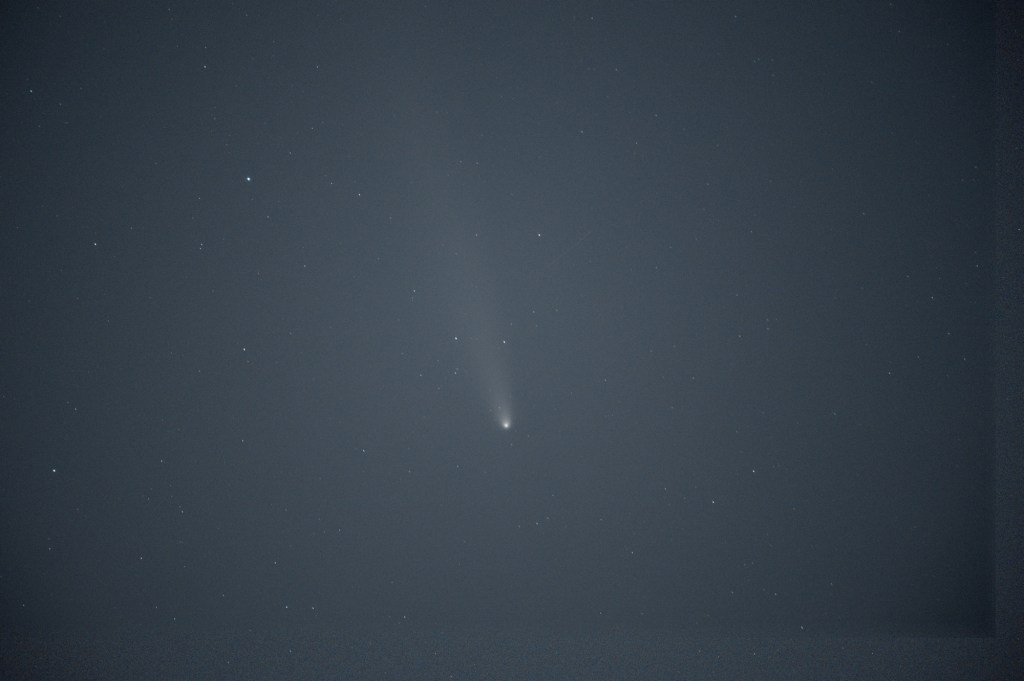
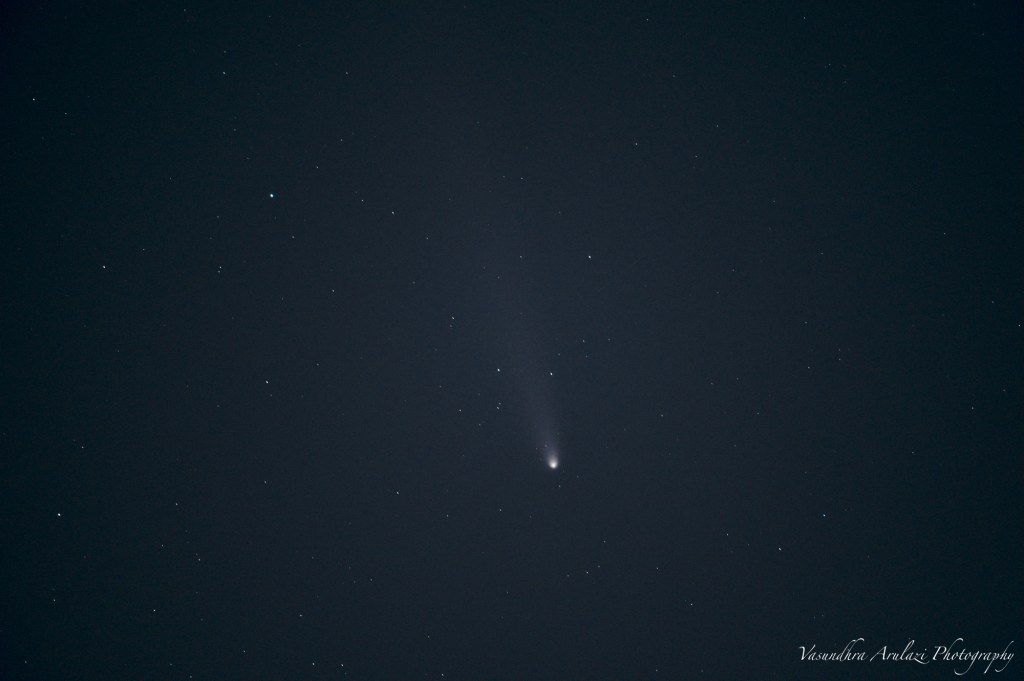
I reopened the stargazing app on my phone and tried to pinpoint where the comet would be. By now, the sun had set, and the parking lot lights disturbed the camera’s ISO, so I took a little walk to the darkest spot within my vicinity and set my camera shooting at a random star, thinking it was the comet. My dad also walked with our EV telescope (this will help later on) and tried slewing it to Vega, a bright star- to verify how accurate the telescope’s collimation is. Once he slewed it, he set the coordinates to the comet and started slewing nowhere near where I thought it would be. And in the telescope, it looked like a beam from a flashlight. I sat right next to the telescope to scope out the general area I needed to aim my camera at, and I jogged over to my camera and pressed the shutter button for some quick photos. I pressed the playback feature on my Nikon and saw nothing but stars. I moved to a different part of the sky, a bit higher up, and snapped another shot. In the image was a glimpse of a blue fireball, just shy of the top half of the picture. While grinning, I raised my camera, and the comet was centered. I had my ISO set to 2000 with a 1-second shutter speed.
In the indigo sky, a brush of hazy white with a hint of blue moves through the sky like a cosmic artist’s paintbrush. It’s bold enough to light up my eyes and soft enough to leave the starry night untouched. With its 18-million-mile-long tail, this celestial object mesmerizes astrophotographers like a moth drawn to a flame. It’s no surprise that its dazzling display sparks a sense of wonder, urging us to capture the fleeting beauty of the universe. Each click of the shutter freezes a moment of time, emphasizing the delicate balance between the ephemeral and the eternal.


 Vasundhra Arulazi
Leave a reply to Miguel Duarte B. Cancel reply