
It’s through a program called STEM Flights! It is completely free, you just need to be 17 or under and complete a simple application!
I have never been to the Sugar Land Regional Airport, but I am glad I did. Although it is a small airport, its cozy ambiance makes up for it. I met my flight mentor, Mr. Marashi, a pilot who helps patients in his free time through a program called Angels for Patients! Something we both have in common is that this is our first STEM Flight experience.
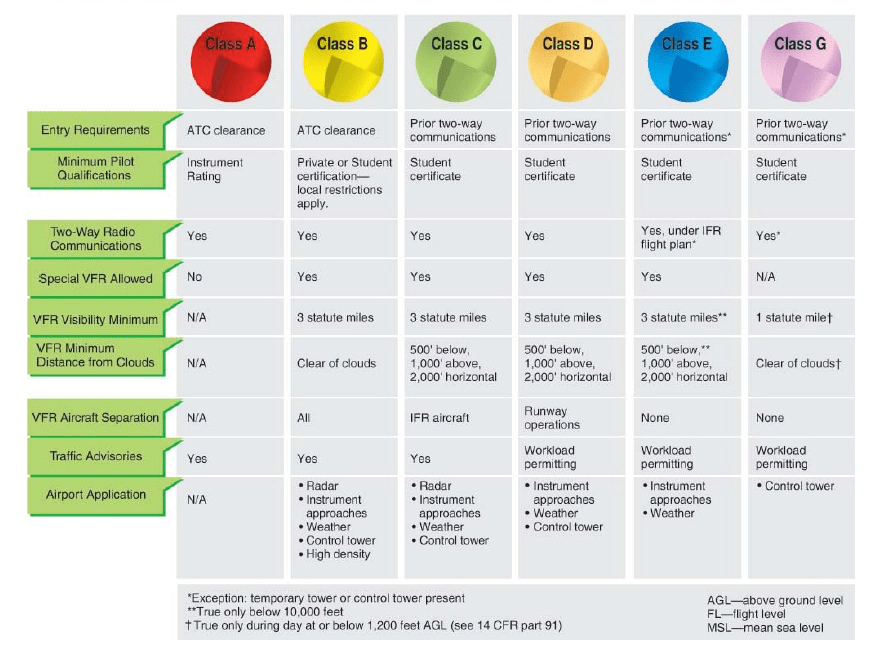
We first discussed the different airspaces and what each class means. There are 6 different classes: Class A, B, C, D, E, F, and G.
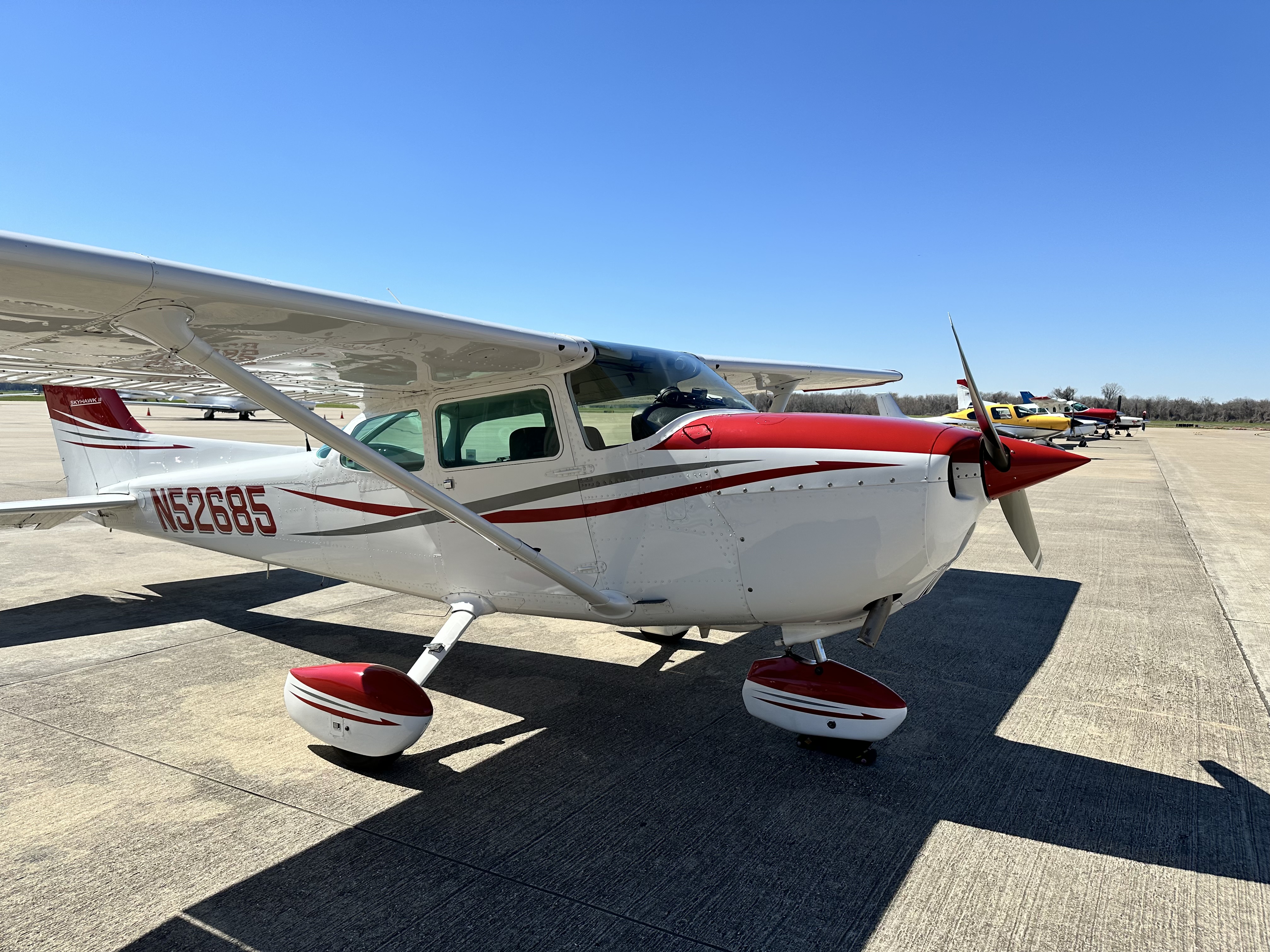
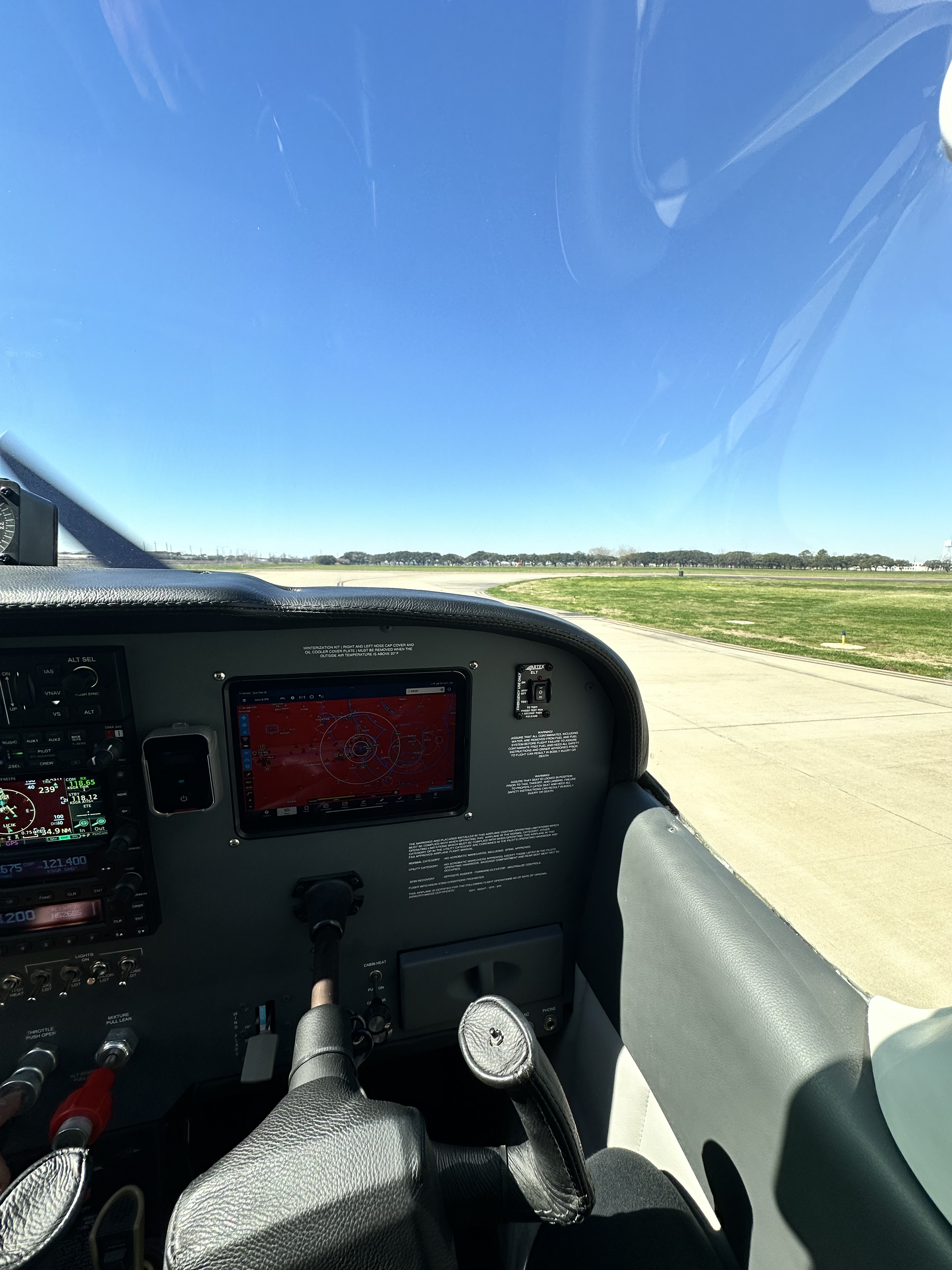
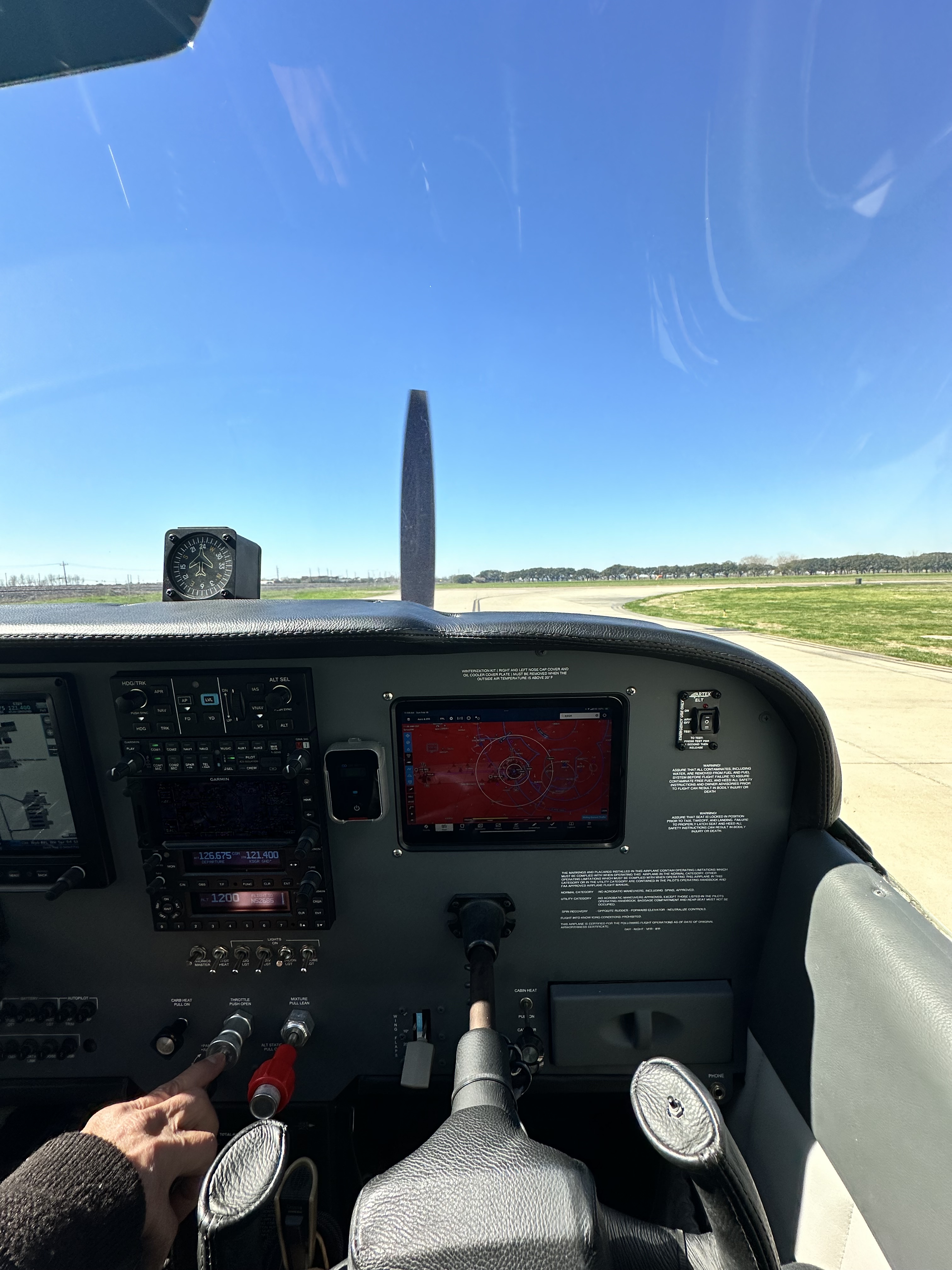
Then, we discussed how his plane, Cessna 172-P, functions. Many common aviation terms are derived from French, for example, empennage. The plane is divided into 3 main parts: fuselage, aileron, and empennage. The fuselage is essentially the body of the plane. The aileron, or flaps, is on the plane’s wings, and the flaps are controlled by the yolk (steering wheel for planes). The last main part is the empennage, which is the end of the plane and mainly consists of a rudder and an elevator. The rudders are controlled by the pedals in the cockpit. At the front of the plane, there is the propeller, which is controlled by the engine and can provide different rpms.
Now, the exciting part: flying the plane! The plane was a four-seater plane, so my parents got to join in the fun 🙂
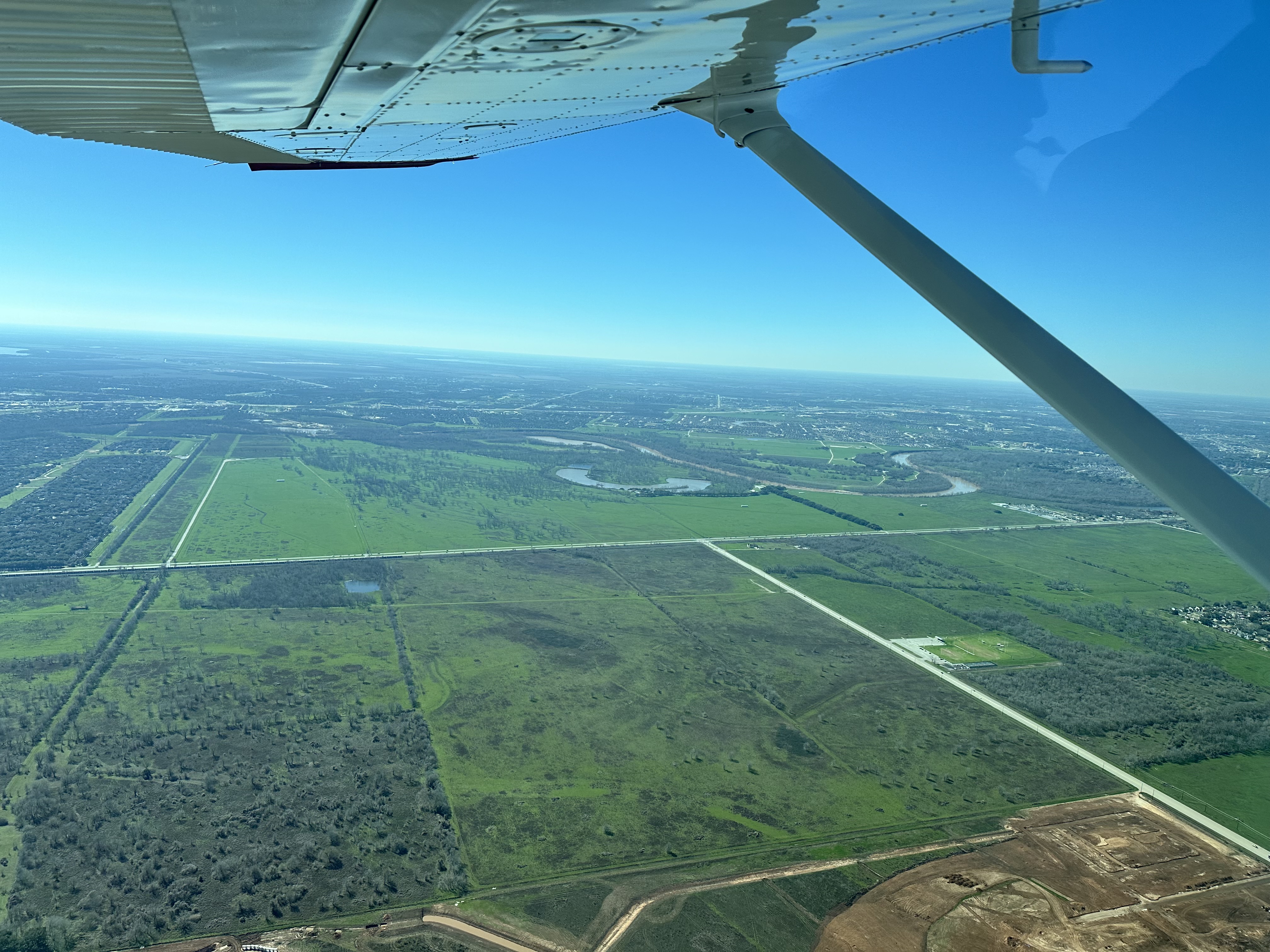
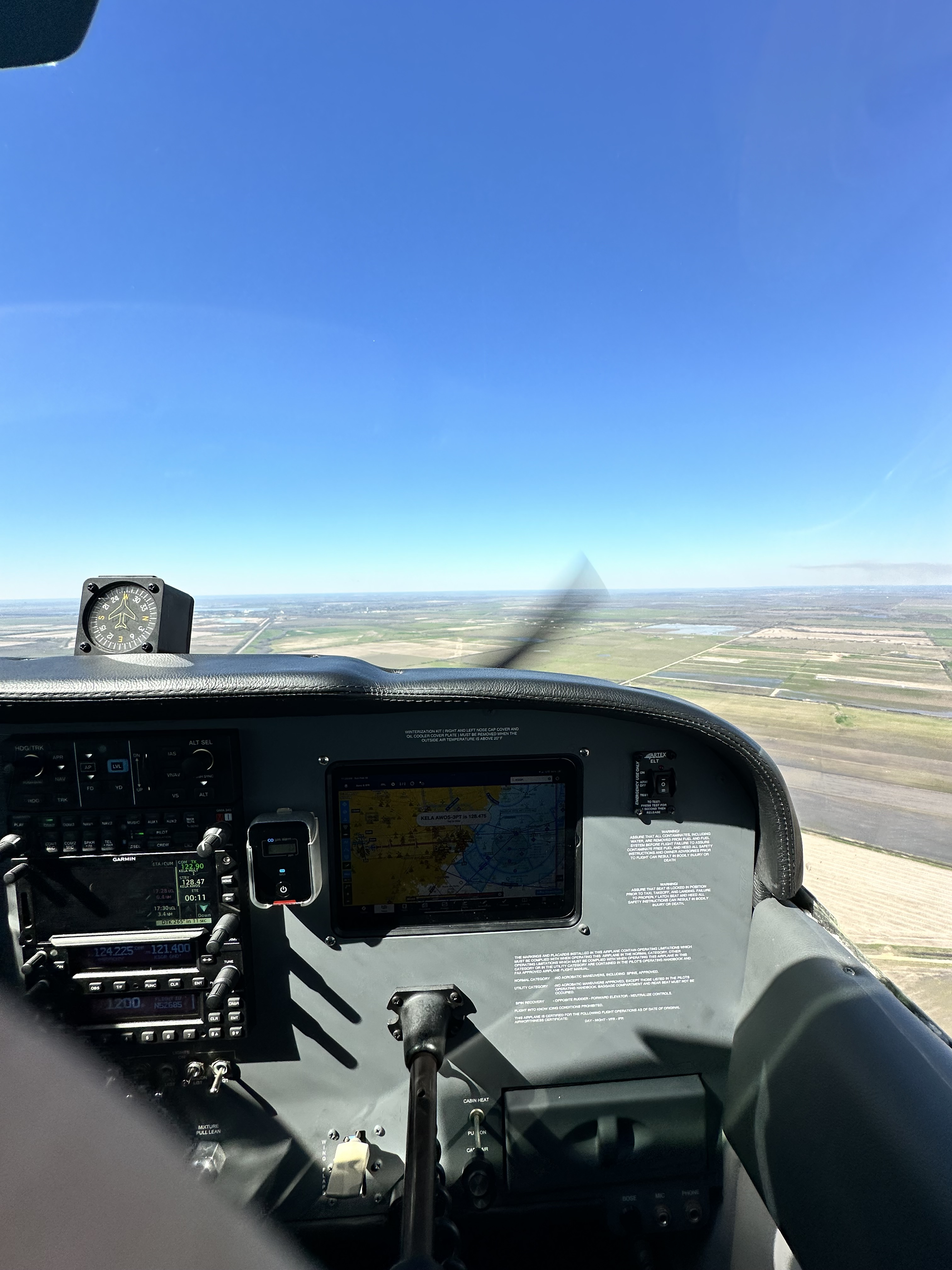
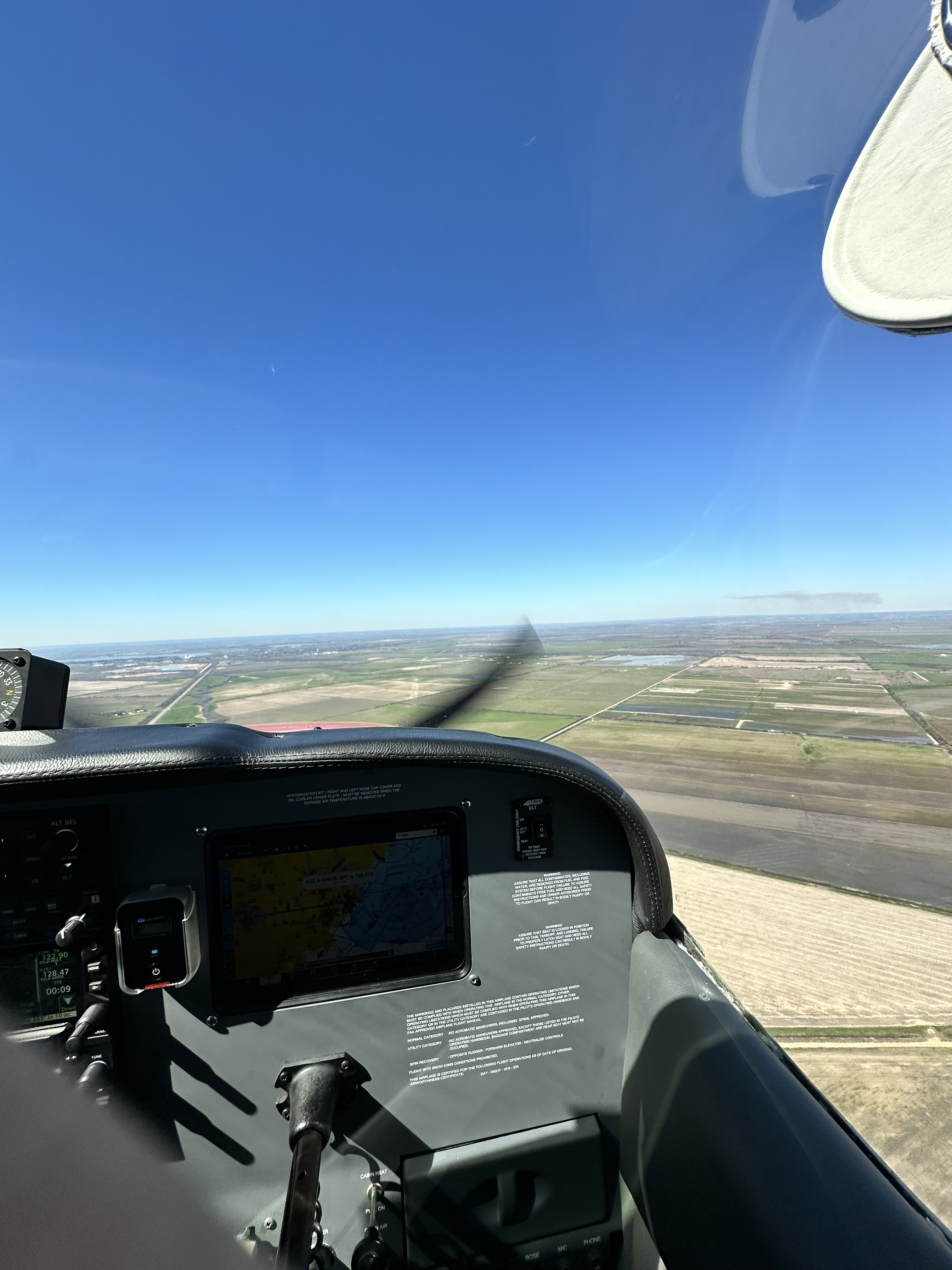
There are two seats in the front and two in the back. The front two are for the pilot and co-pilot. Both the pilot and co-pilot have the yolk steering wheel and pedals. Mr. Marashi’s planned path was from the Sugar Land Regional Airport (KSGR) to the Eagle Lake Airport (KELA). He set the codes in the Garmin GPS, and we started our journey. First, he asked the air traffic control tower for permission to take off. Then he drove the plane on the runaway called Alpha 35. Because we had permission, he took off, and we were in the air. Using the headphones provided, we were able to communicate the functionality of Cessna 172-P. From KSGR to KELA, he put the plane on autopilot and showed the different instruments in the cockpit. This includes an instrument that connects the plane to air traffic control using transponder codes, the throttle, mixture pull lean (mixes the fuel and ensures there’s enough fuel in the engine), and more. After around 30 minutes, he did touch and go on KELA. Touch and go means you land for a second and fly up again.
Now that the autopilot was off and I was not in any airspace classes, I had the opportunity to experiment with the controls and take the plane for a spin. Following instructions, I firmly gripped one of my hands onto the yoke steering wheel and gradually turned it to the left. The plane smoothly rolled to the left, and a wave of exhilaration washed over me, unlike any feeling I had experienced before. I used the pedals to yaw the plane, and this beast of a machine turned. I could feel the gentle resistance of the controls as I made the maneuver, and the sensation of being in command of such a powerful machine was both thrilling and humbling. The aircraft responded to my touch as if it were an extension of my own body, and for some time, I felt a deep connection with the skies. It was a moment of pure joy and discovery, and as I continued to explore the capabilities of the aircraft, I knew that this experience would stay with me forever. Although this was only for around 10 minutes, this memory would be forever embedded in me.
When we returned to KSGR’s airspace, Mr. Marashi took over, but I was able to communicate to air traffic control, and these were the exact words said that would be forever etched in my mind:
Me: “Houston Approach Cessna 52685 12 miles west of Sugar Land VFR at 3000 landing Sugar Land”
Although I couldn’t remember the exact words said by the ATC, I remembered the transponder code he told us to use: 123.800
After inputting the transponder code, I announced, “Sugar Land tower Scott 52685 10 miles west of Sugar Land 3000 landing Sugar Land AWAS”
Mr. Marashi descended toward KSGR, and I watched him use the throttle to lower the RPM power on the propeller and touch the ground effortlessly. This was truly a once-in-a-lifetime experience, and I can’t wait to fly a plane again in the future.
Check out https://www.stemflights.org/ if you want to fly a plane too! No gatekeeping here
Also, check out my flight path, you will know when I start flying with all the loops when we head back to Sugar Land
https://www.flightaware.com/live/flight/N52685/history/20240218/1733Z/KSGR/KSGR


 Vasundhra Arulazi
Leave a comment