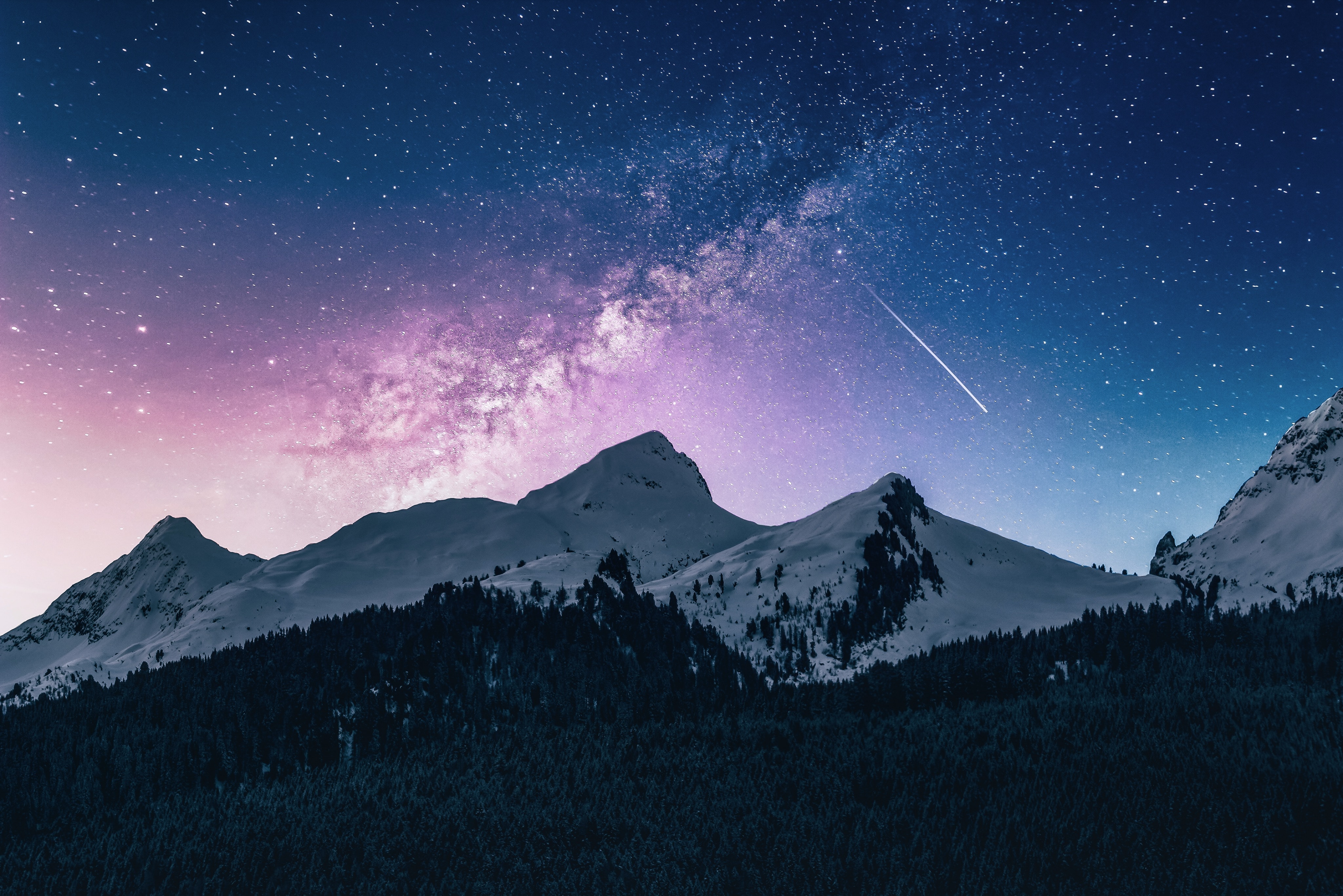
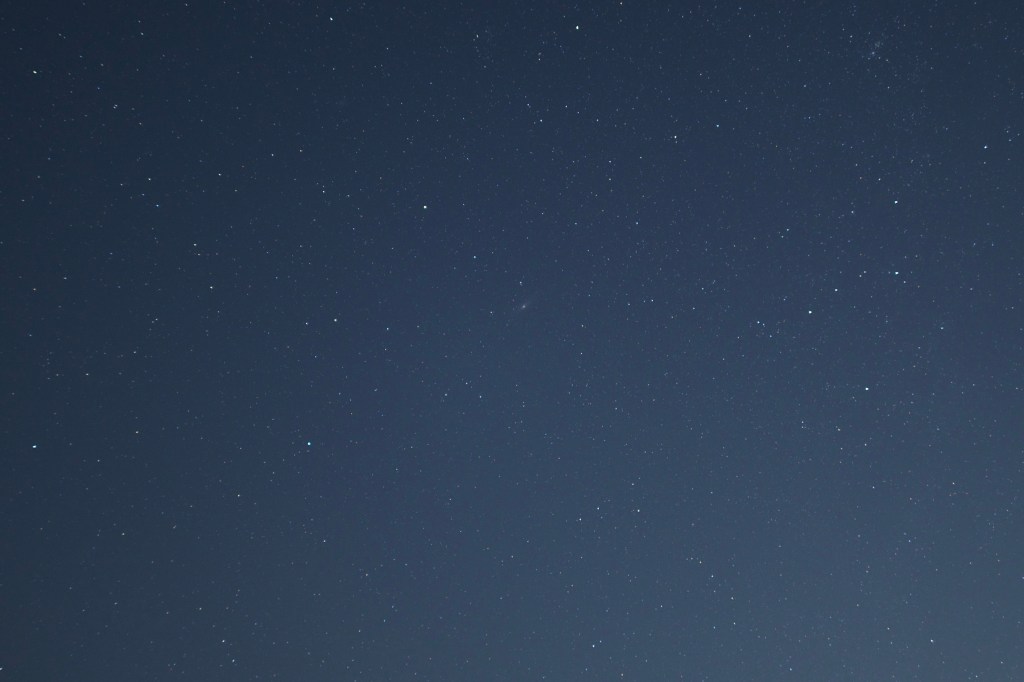
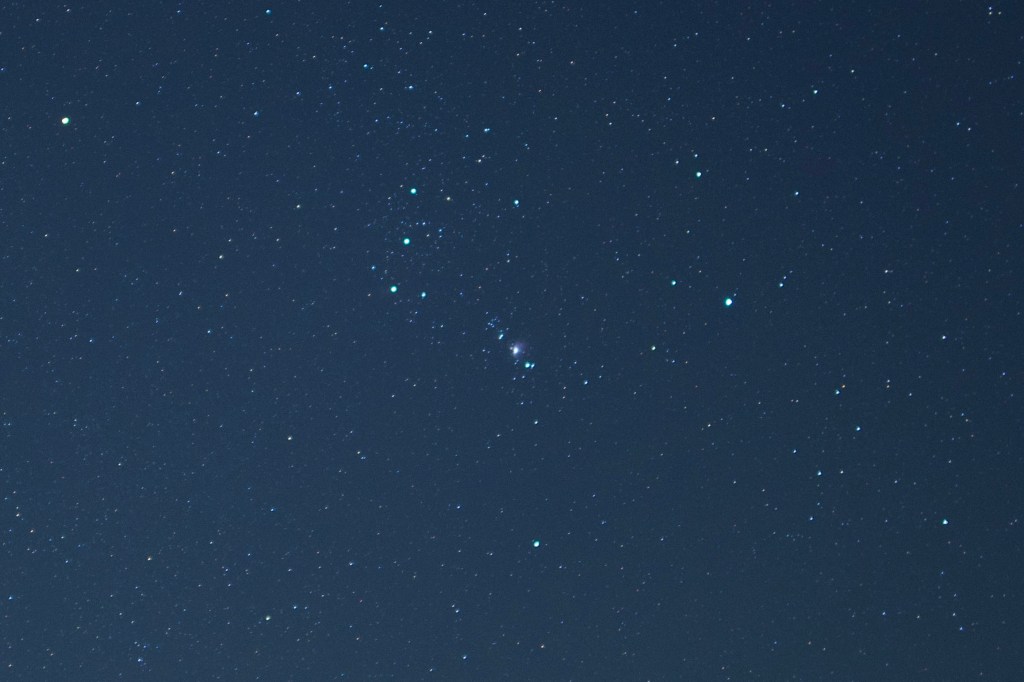
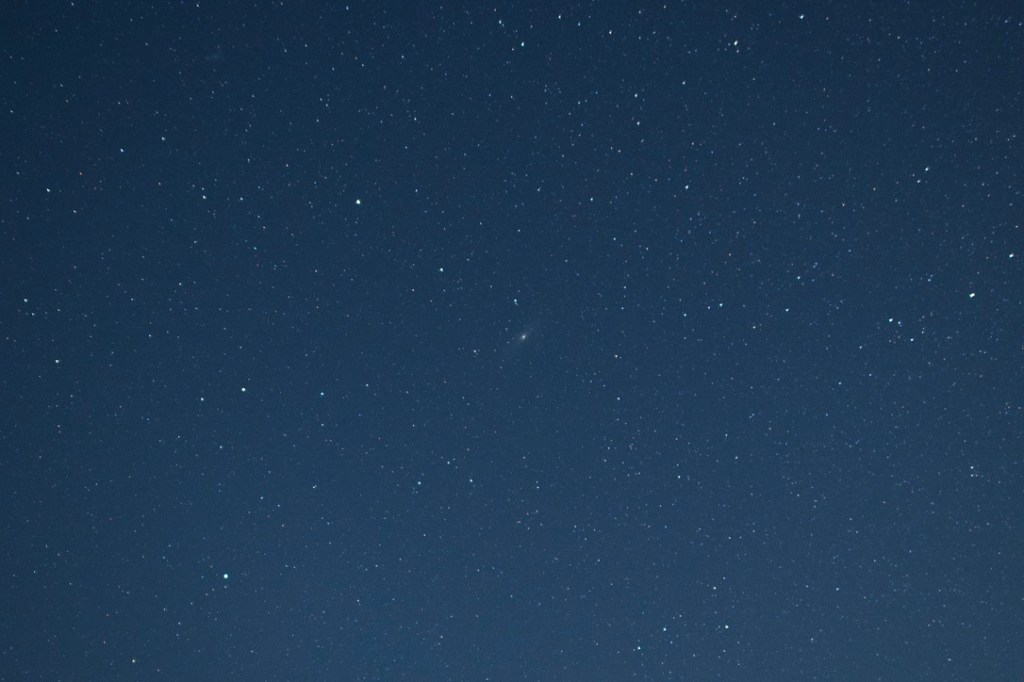
Whenever I look up, the stars look back at me. This hidden beauty, covered by the light pollution in my neighborhood, is unveiled in the skies of Brazos State Park. To reveal even more diamonds in the sky, I took some pictures using my Nikon D850 with my Sigma wide-angle lens. At ISO 1000, I captured the Orion Constellation and the Orion Nebula with an aperture of f/1.4 and 10 seconds of exposure. Later, I turned my tripod around and photographed the sky randomly until I realized I was photographing the Andromeda Galaxy. Although small with minute detail, the Andromeda Galaxy is one of the best deep-sky objects (DSO) that I’ve ever photographed. I used the same settings, except the ISO was 640.
This experience taught me that I am really into astrophotography and want to photograph DSOs. In the future, I plan on buying a telescope, a guiding scope, a monochrome astrophotography camera for tracking, and, most importantly, an equatorial mount. Learning polar alignment and star tracking on weird Windows applications, Adobe Photoshop software, and stacking images is crucial in developing the most outstanding photo. This is an expensive hobby; hopefully, I can make the most of it. While I train on this adventure, check out the photos I’ve clicked so far!

 Vasundhra Arulazi
Leave a comment